
The musical soundtrack of World of Warcraft: Midnight is widely regarded by the community as one of the finest compositions in World of Warcraft’s history, blending reimagined themes from The Burning Crusade’s Quel’Thalas music with entirely new Void invasion motifs that create an emotionally resonant audio experience that elevates every aspect of the expansion from questing to raiding to open world exploration. The Midnight soundtrack was composed by Blizzard’s award-winning audio team, led by composers who have been contributing to World of Warcraft’s music since the game’s original launch, and their deep familiarity with the Quel’Thalas musical identity — combined with their creative vision for the Void invasion’s sonic aesthetic — has produced a soundtrack that honors the past while boldly embracing the expansion’s dark and dramatic narrative themes. This soundtrack analysis explores the musical compositions that define the Midnight experience, the specific zones and encounters where the music shines brightest, and the ways in which the Midnight soundtrack enhances the player’s emotional connection to the Void invasion storyline and the Quel’Thalas region itself.
Reimagining Quel’Thalas: The Burning Crusade Themes Revisited
The most immediately striking aspect of the Midnight soundtrack is its reimagining of The Burning Crusade’s Quel’Thalas music, which has been completely recomposed and reorchestrated for the modern expansion using live recording sessions, enhanced production quality, and contemporary compositional techniques that add depth and emotional complexity to the beloved themes that players have associated with Silvermoon City and the Eversong Woods for nearly two decades. The Silvermoon City theme in Midnight retains the soaring string melodies and ethereal choral harmonies that defined the original TBC Silvermoon music, but it adds a darker, more urgent undertone that reflects the city’s current state as an active military headquarters defending against the Void invasion rather than a tranquil elven capital at peace.
The Eversong Woods zone music in Midnight is particularly noteworthy, because it combines the gentle, nature-infused melodies of the original Eversong Woods music with Void-tainted dissonance that creeps into the composition as the player ventures deeper into Void-corrupted areas of the zone. The musical transition from the restored Sunwell-energy areas (which feature bright, golden orchestral arrangements with prominent harp and string sections that evoke the beauty of the elven homeland) to the Void-corrupted areas (which introduce low brass, minor-key string passages, and dissonant choral elements that communicate the encroaching Void threat) is seamless and emotionally powerful, creating an audio experience that tells the story of Quel’Thalas’s struggle between restoration and corruption without a single word of dialogue or quest text.
- Silvermoon City Theme: Soaring strings, ethereal choir, darker undertone reflecting the city’s military defense role
- Eversong Woods Restored Theme: Bright orchestral arrangements, harp and string sections, golden Sunwell energy
- Eversong Woods Corrupted Theme: Low brass, minor-key strings, dissonant choir, Void invasion urgency
- Ghostlands Lament: Mournful cello solo layered over spectral choir, reflecting the Ghostlands’ double tragedy of Scourge and Void corruption
- Zul’Aman War Drums: Amani troll percussion and rhythmic chanting blended with Void energy soundscapes

Void Invasion Music: The Soundtrack of Cosmic Horror
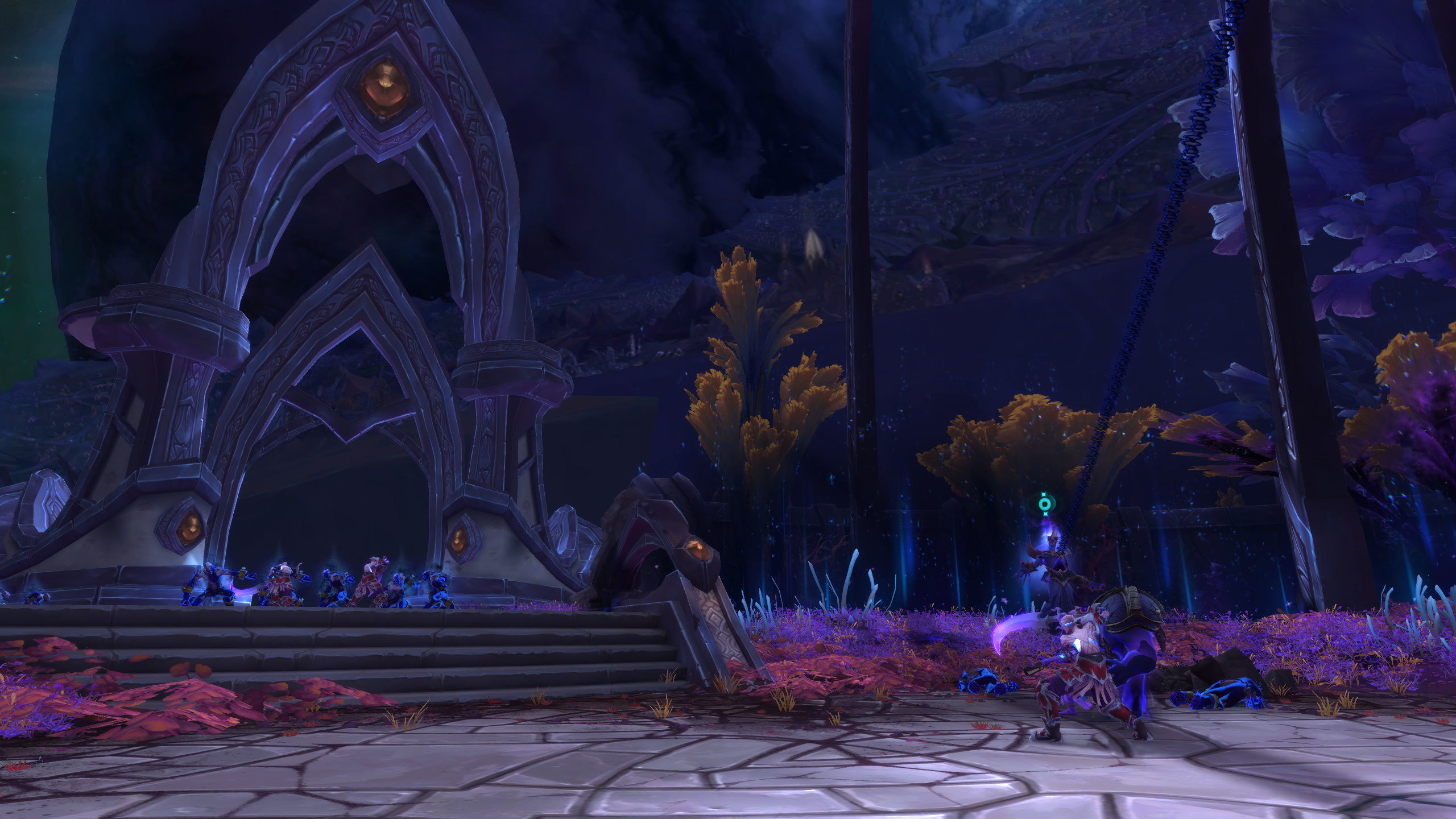
The Void invasion music in Midnight is the most distinctive and emotionally impactful component of the expansion’s soundtrack, because it introduces entirely new musical themes that have no precedent in World of Warcraft’s previous expansions and that communicate the cosmic horror of the Void lords’ assault on Quel’Thalas through compositional techniques that are uniquely suited to the Void’s alien and incomprehensible nature. The Void invasion themes feature atonal string passages, irregular rhythmic patterns that create a sense of unease and disorientation, and choral elements sung in languages that evoke the Void’s incomprehensible cosmic identity rather than the familiar mortal languages that players are accustomed to hearing in World of Warcraft’s music.
The Voidstorm music in Harandar is the pinnacle of the Void invasion soundtrack, featuring a massive orchestral composition that combines the full orchestra (strings, brass, woodwinds, and percussion) with an expanded choir performing atonal vocalizations that create a sense of cosmic dread and overwhelming Void power. The Voidstorm music builds gradually as the player progresses through the Harandar zone, starting with subtle Void-tainted undertones in the early zone quests and escalating to the full orchestral and choral climax during the Voidstorm epicenter encounters, creating a musical arc that mirrors the narrative escalation of the Void invasion threat and the player’s growing understanding of the cosmic forces at play.
The Void invasion boss music — particularly the music for the Dimensius the All-Devouring encounter in the March on Quel’Danas raid — is among the most intense and dramatically powerful boss music in World of Warcraft history, featuring driving percussion, brass fanfares that evoke the Void lord’s cosmic power, and choral passages that shift between minor-key menace and moments of surprising beauty that reflect the Void’s seductive allure. The Dimensius boss music is designed to escalate with each phase of the encounter, with Phase One featuring a relatively restrained orchestral theme, Phase Two introducing the full choir and irregular rhythmic patterns, and Phase Three combining all musical elements into a climactic composition that drives the players’ adrenaline and emotional engagement during the encounter’s most dangerous and decisive phase.
The Sunwell Theme: Light, Arcane, and Hope
Amidst the darkness of the Void invasion music, the Sunwell theme in Midnight stands as a beacon of light, hope, and elven resilience, featuring a composition that blends the Sunwell’s dual nature as a font of both Light and Arcane energy into a harmonious musical arrangement that communicates the Sunwell’s importance to Quel’Thalas’s survival and the elven people’s determination to protect it from Void corruption. The Sunwell theme is performed primarily by strings and harp, with a solo soprano voice that represents the Sunwell’s sentience and its connection to the elven people who have drawn power from its waters for millennia.
The Sunwell theme appears in multiple variations throughout the Midnight soundtrack, each adapted to the narrative context in which it is used. In the restored Sunwell areas of Eversong Woods, the theme is bright and hopeful, featuring major-key string melodies and a confident soprano vocal performance that communicates the Sunwell’s restored power and its role as Quel’Thalas’s primary defense against the Void invasion. In the Sunwell Plateau raid encounters, the theme becomes more urgent and dramatic, with faster tempos, fuller orchestration, and a more intense soprano vocal performance that reflects the Sunwell’s vulnerability to Void assault and the elven defenders’ desperate struggle to protect it. In the concluding cinematic music, the Sunwell theme reaches its most triumphant and emotionally resonant form, featuring the full orchestra and choir performing a soaring, victorious arrangement that celebrates the Sunwell’s survival and the elven people’s victory over the Void invasion threat.
Why the Midnight Soundtrack Matters for the WoW Experience
The Midnight soundtrack matters because it is one of the most effective storytelling tools in the expansion’s narrative arsenal, communicating emotional context, narrative stakes, and thematic identity through music in ways that quest text, cinematics, and NPC dialogue cannot achieve alone. The music of Midnight tells the story of Quel’Thalas’s struggle between restoration and corruption, of the Void invasion’s cosmic horror and the elven people’s resilient defiance, and of the Sunwell’s enduring light in the face of overwhelming darkness — and it tells that story with a compositional sophistication and emotional depth that rivals the greatest film soundtracks in the medium of cinematic music.
For returning players who have not experienced World of Warcraft’s music in years, the Midnight soundtrack is an immediate and powerful reminder of why they fell in love with the game in the first place, because the music taps into the same emotional wellspring that made the original Quel’Thalas experience so memorable and transforms it into a contemporary composition that is both nostalgically familiar and excitingly new. For new players who are experiencing World of Warcraft’s music for the first time in Midnight, the soundtrack is an introduction to one of the game’s greatest strengths — its commitment to world-building through musical composition — and it sets a standard for expansion soundtracks that will be difficult for future expansions to match or exceed.
The music of World of Warcraft: Midnight is not merely background audio that plays while you quest and raid — it is an integral component of the expansion’s identity, a narrative voice that speaks to the player’s emotions and imagination, and a creative achievement that stands among the finest video game soundtracks ever composed. Whether you are standing in the restored Silvermoon City listening to the reimagined Quel’Thalas theme, fighting through the Void-corrupted Ghostlands to the Ghostlands Lament, or confronting Dimensius the All-Devouring to the most intense boss music in World of Warcraft history, the Midnight soundtrack is your constant companion and guide through the emotional landscape of the Void invasion, and it is the aspect of the expansion that will linger in your memory longest after the content has been completed and the achievements have been earned.