The history of World of Warcraft is punctuated by periods of profound imbalance, where specific abilities or specialization mechanics achieved a state of functional invincibility or catastrophic damage output, fundamentally disrupting competitive parity. This analysis catalogues the most statistically extreme and competitively disruptive abilities across different eras, focusing on those that exhibited zero counterplay or generated disproportionate power relative to their resource cost. These moments define the historical high water marks of specialization dominance.
This report delineates the most severe instances of power imbalance through critical ability failure.
Evaluation Criteria: Counterplay Negation, Power to Cost Ratio, and Competitive Disruption Index
Abilities are evaluated based on three weighted criteria. First, Counterplay Negation measures the extent to which the ability could be effectively mitigated, interrupted, or outplayed, prioritizing abilities with negligible defense options.

Second, Power to Cost Ratio assesses the damage or effect output relative to the resource expenditure, favoring abilities with extremely low or zero resource investment. Third, Competitive Disruption Index quantifies the ability’s impact on high end rated player versus player and raid performance, favoring mechanics that dictated the entire meta composition. High negation and high disruption are indicators of a broken ability.
The Burning Crusade Paladin Seals: Unmitigated Power to Cost Ratio
During The Burning Crusade, the stacking effect of Paladin Seals, particularly Seal of Vengeance, exhibited an extreme Power to Cost Ratio. This mechanic allowed for massive, unmitigated damage output during long duration encounters, requiring minimal resource investment.
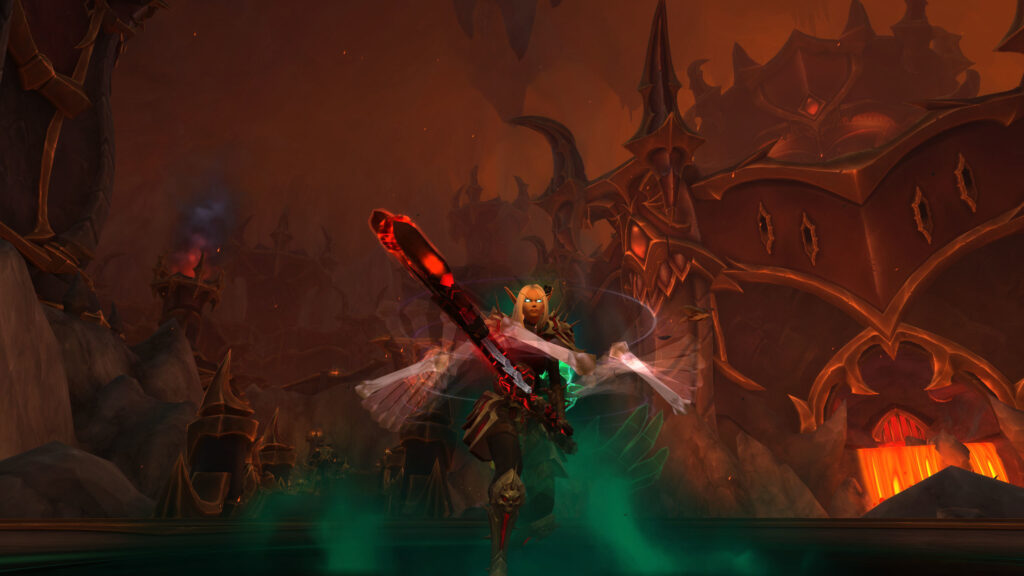
In player versus player, the sheer sustainability and burst potential, often combined with near invulnerability, resulted in a high Competitive Disruption Index. The lack of reliable Counterplay Negation against the burst output made these specializations functionally overpowered in controlled environments.
Legion Demon Hunter: The Power of Self Sustain and Counterplay Negation
The initial state of the Havoc Demon Hunter in Legion showcased peak Competitive Disruption Index. Their self healing capabilities and high mobility were fundamentally flawed, granting them effective Counterplay Negation.

Their damage output was high, but the ability to heal themselves instantly to full health during damage phases, particularly in player versus player, negated opponents’ efforts. This high sustainability combined with rapid area damage output established a meta where their presence determined the win condition.
Cataclysm Discipline Priest: The Shield Wall Phenomenon
The Discipline Priest’s Power Word: Shield mechanic in Cataclysm, coupled with the talent design, created a situation of total Counterplay Negation for raid damage. The ability to stack massive shields on the entire raid, effectively absorbing more damage than was being dealt, invalidated mechanics and trivialized damage output checks. This resulted in an immediate and severe Competitive Disruption Index, forcing developers to fundamentally redesign the interaction between damage absorption and healing output due to its raw power to cost ratio.
Catalogue of Historically Dominant Abilities
- **The Burning Crusade Paladin Seal Stacking:** Extreme damage output with minimal resource expenditure, high Competitive Disruption Index.
- **Wrath of the Lich King Death Knight Death Grip:** Zero Counterplay Negation against positional control, allowing for forced target switching and tactical dominance.
- **Cataclysm Discipline Priest Power Word: Shield:** Total absorption capability, negating raid damage mechanics, high Competitive Disruption Index.
- **Warlords of Draenor Rogue Shadow Dance:** Near permanent stealth access in player versus player, providing high Counterplay Negation against targeting.
- **Legion Havoc Demon Hunter Self Healing:** Unjustified self sustain during damage phases, negating opponent burst and creating effective invulnerability.
Conclusion: Defining the Limits of Design
The most broken abilities in history are defined by the intersection of high Counterplay Negation and an exaggerated Power to Cost Ratio. These instances necessitated swift and often radical redesigns to restore Competitive Disruption Index parity.
They serve as critical reference points for developers, illustrating the limits of sustainable specialization design.